





分享到微信,
请点击右上角。
再选择[发送朋友]
或[分享到朋友圈]
在火热的中国当代艺术中有一个重要门类,生机勃勃、不断以强烈的视觉性震撼着人们,这就是中国当代雕塑。更重要的是,雕塑的创作或制作开始被不同造型艺术家所利用,创作出一个又一个观念表现与视觉感突出的雕塑作品。雕塑的含义和功能因此变得丰富起来,不再仅仅是三维形体的空间占有,它涉及到了整个对当代艺术的观念认识。
刘若望与雕塑就是这样一个例子。他出生在陕北,有着朴实的性格,像黄土高原一样心地憨厚,对艺术坚韧、执著,这些成为他学习艺术、追求艺术的根本和艺术生命来源。他不断学习、摸索,也学习绘画,但最终让他怀有不可遏制的艺术表现欲望的,是雕塑。或者在他看来,不是规范下的雕塑分类,而是他意识深处的生命涌动,使他触摸到这种形体的力量,使他感动于这种体量的存在。他不仅仅是掌握作为艺术的雕塑语言,最重要的是他让雕塑“联动”起来,在隐匿的脉络中构建一种历史叙事。这个叙事既不是现实主义反映论雕塑,模拟某种社会形象,而是建立在纵向的历史情境中,向自己的生命经验索取表现灵感,将直观的具象与超现实的观念融合起来。刘若望对雕塑的驾驭完全是为了他的叙事想象,他确立如此重量的体块表现,是因为他内心被某种力量慑服着,他必须用视觉的力量去对抗它、瓦解它。这时候,雕塑语言对于他,不再是空间概念,而变成与历史对话的一种视觉隐喻。
他从早期的《东方红》开始,就试图将个人情感与历史符号融为一体,初步显露了他寻找自己的艺术构成之路,也因为他的作品厚重不失情感、粗犷不失细腻,获得中央美术学院“学院之光”毕业展奖。之后,他的一系列《人民》、《车马仪仗队》作品获得良好的反映。七尊《人民系列》雕塑,立放在798艺术区,作为一道景观,成为798的艺术符号之一,屡屡见诸于国内外艺术媒体上。刘若望不断延伸他的创作思路,继续寻求自我作品的突破,在沉稳中演绎自己的艺术进程。他没有追逐后波普的游戏化雕塑作品,而是仍然努力探索历史中蕴含的文化元素。
作为个体的艺术家,刘若望对历史有自己的经验思辩,他没有单纯拾取几个符号,而是根植于他的生存环境中,重新创造出一种形象。他的内心深处一直有一种冥冥的呼唤,积蓄良久。这些年来,他东奔西走、反复摸索,但这种呼唤总是如影随形,挥之不去,竟至于成为压在心底的苦闷。这就是他对自己生于斯、长于斯的大地的追溯。历史的图像时时映现在自己的脑海里,那是历史与山川地理契合后印在他潜意识中的呼唤,于是一组天兵的形象呼之欲出。天兵,不过是一种历史隐喻,秦川渭水自古是兵燹之地,天下之争由此而出:秦皇汉武,文韬武略;李唐盛世,恢宏气象。所谓天下者,据秦岭函谷,即可望中原而得之。这是一种历史的故旧形势,但对于刘若望,他创作天兵,名之为天下,是把天下放进历史的陈述中,用视觉将历史暗道掩蔽的豪气释放出来,于是天兵成为唤起铁马金戈的号角。
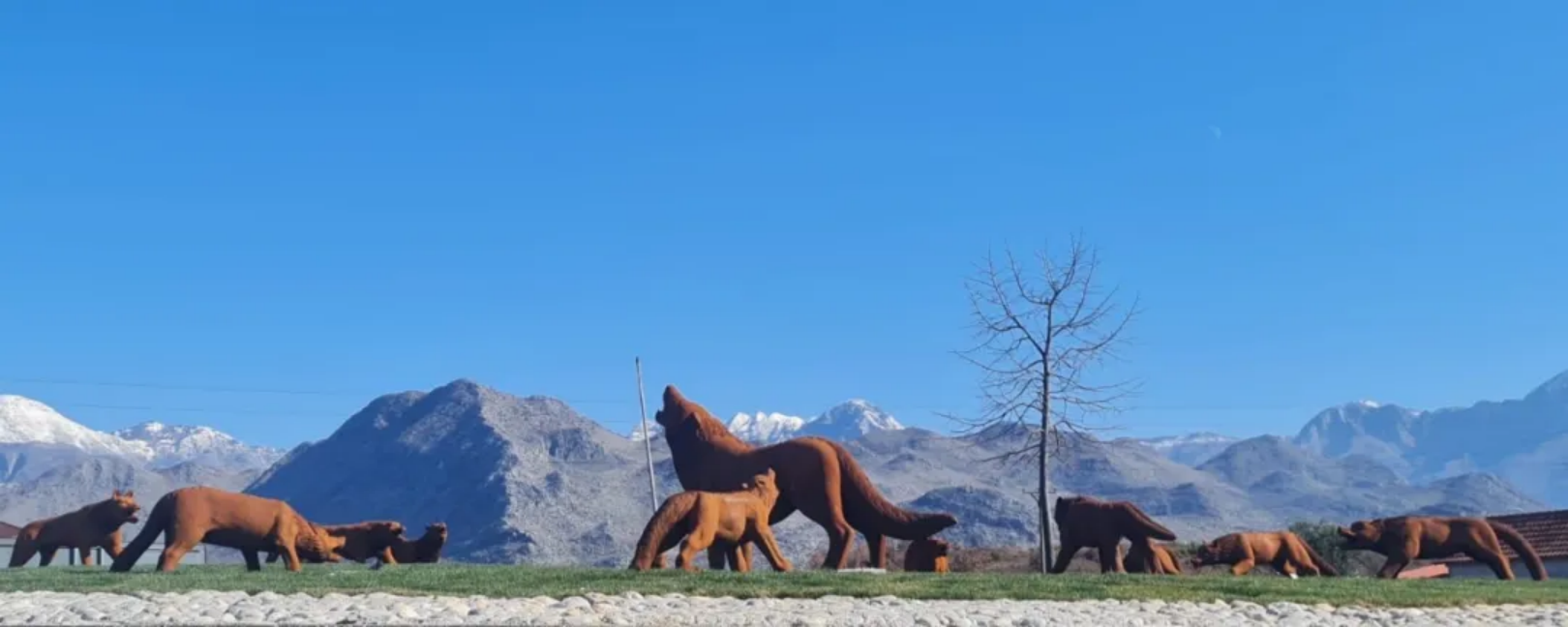
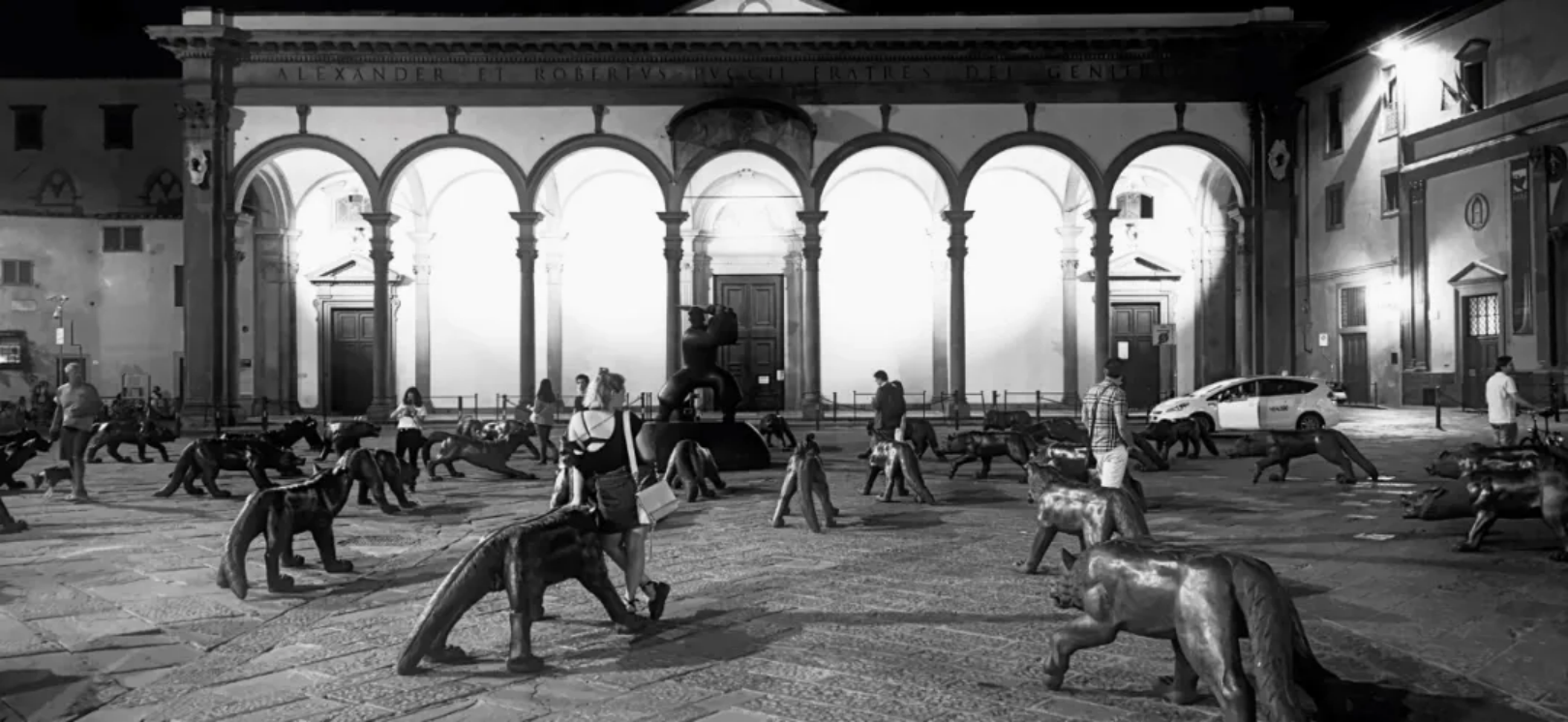
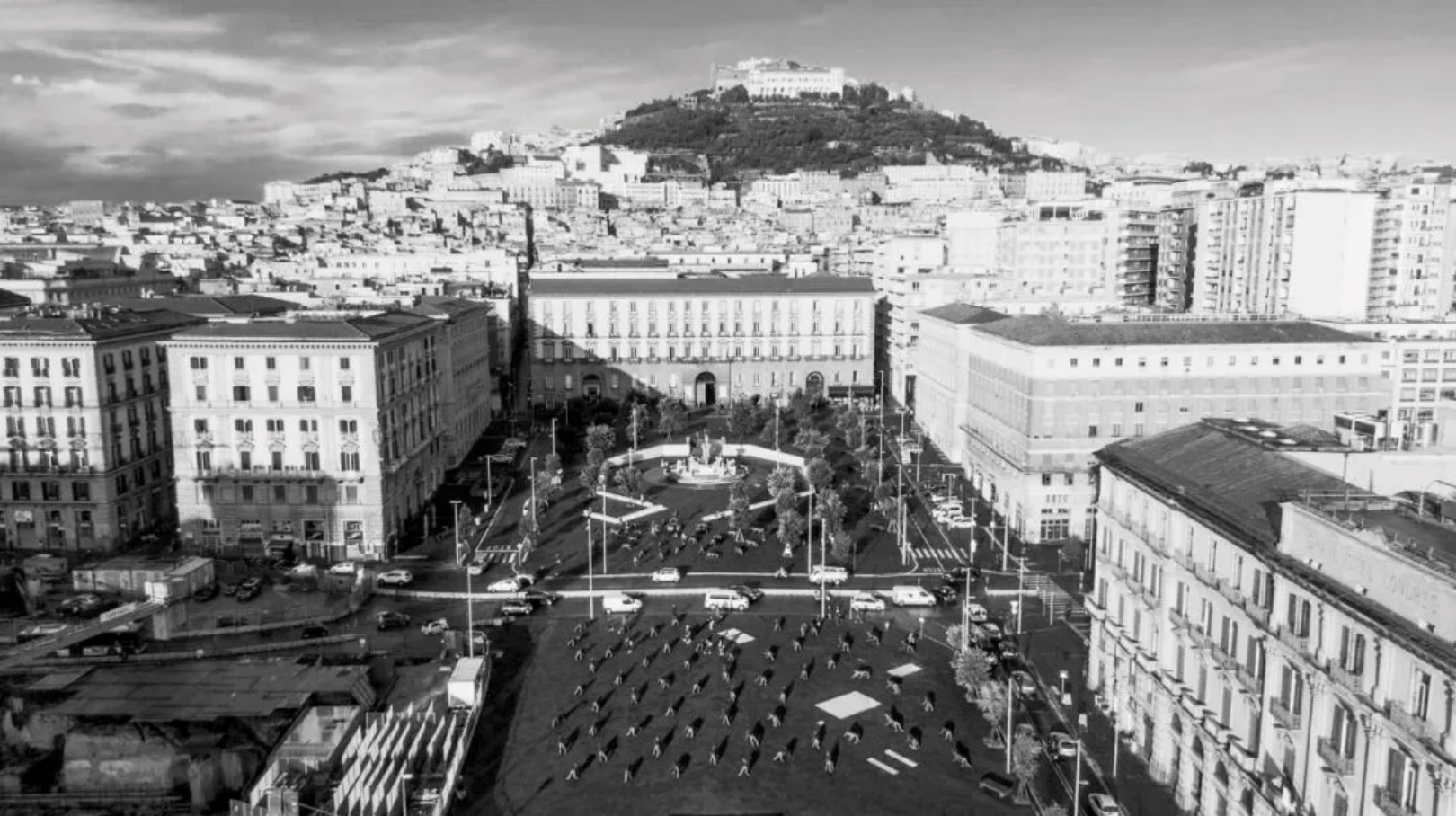
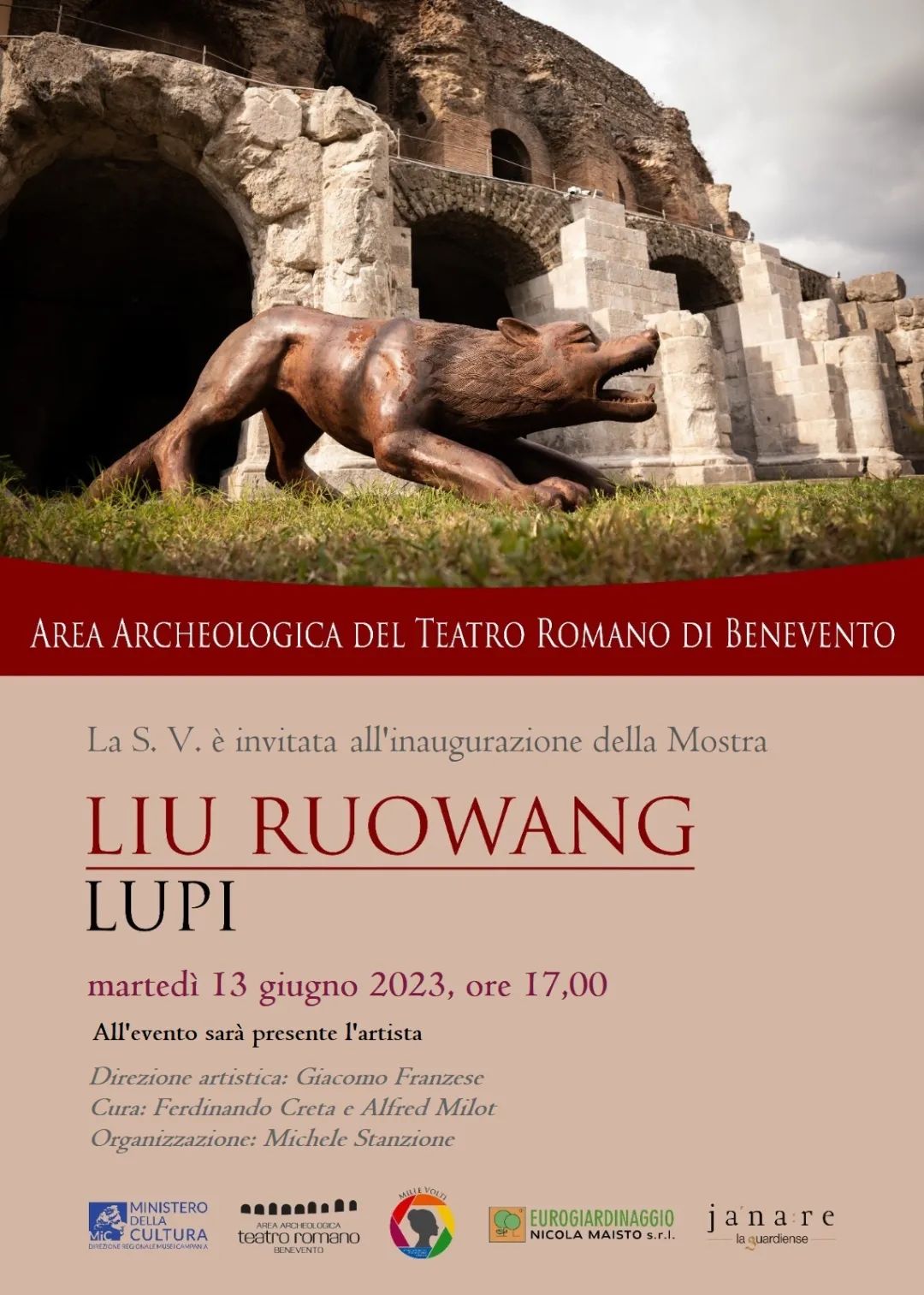
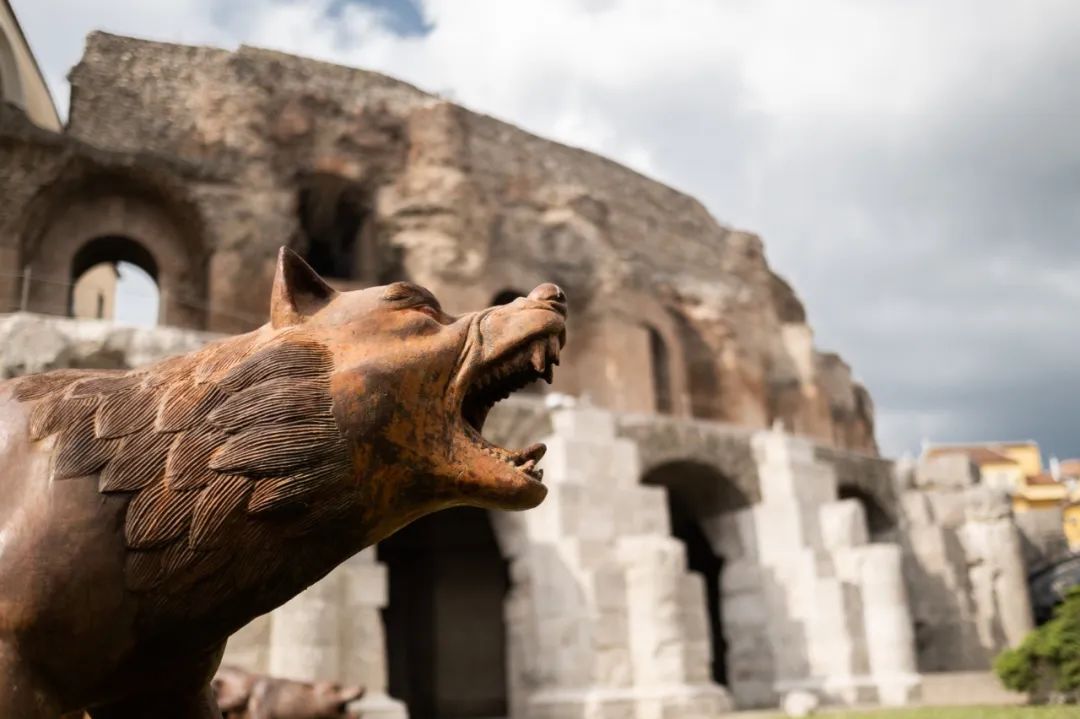
所以,刘若望再面对历史时,就对雕塑有了不同的理解,他让“天兵”群像具有了内在的戏剧性。天兵来自民间神话的教谕,常常唤起无穷的畅想,将一切社会政治观念融入进去,天兵替天行道,天生具有合法地位;天兵,骁勇疆场,战无不胜;天兵,成为力量的象征,而天下,则成了天兵驰骋的疆域。于是,《天兵》被布局成一道视觉景观,艺术家的曾经梦想因此而得到实现,个体对历史的情结转化成公共的视觉在场,历史隧道就此打通,使观众有了身临其境的幻觉感。视觉由此通向触觉,青绿锈迹与斑驳土色产生考古的错觉,感性地拥抱了《天兵》指向的历史叙事。在此,一个新的力量象征诞生了。
这是熔铸秦汉李唐的一种形象,阳刚而有正气,略微沉重而不乏诙谐。刘若望的选择也意味着雕塑的形式被超越,当数字化创造着新时代的视觉幻境时,雕塑何为,就成为一种思考和选择。事实上,雕塑可以被超越,也可以被挪用,这也是为什么有如此多的当代艺术家争相用雕塑语言做作品,而且其制作的雕塑已经不是传统的雕塑,成为张扬艺术家观念与立场的一个道具。这种趋势也是当代艺术的一个特征,即不同媒介的艺术都可以拿来表达艺术观念,作为媒介的艺术形式不再是评判艺术的界限标准,相反越界行为越来越多,这已经不是客串,而是确确实实的艺术行为。对此,做一个纯粹的雕塑家在今天越来越困难;正像做一个纯粹的造型艺术家也越来越困难一样。艺术的功能与内涵都发生着剧烈的变化,不安于一种形式的表现越来越成为今天的艺术家的选择。对于现代雕塑,“其特征之一,就是它越来越表现出创作者的意识,他们把雕塑当做媒介,介于静止与运动之间……这种张力确定了雕塑的状态,从而实现了它的巨大表现力。” 所以,刘若望看待雕塑,就不再单纯地从造型形式去把握,而是从对问题的思索入手。形式为内容服务,在今天变得如此简单明了,但是这样的内容是自己的,不是外在强加的,这是很重要的一个特征。否则,内容有可能失去艺术家的个体性和直接性。
在今天,一次作品不能表达所有,一个艺术家不代表所有。当具象成为一种选择,意味着我们有选择的文化心理和社会因素;但是一种流行的选择不表示另类的选择要被忽视。当个体的艺术家与作为社会选择的机制之间存在胶着状态时,意志强的艺术家会充分张扬自己的个体特征和内在思考,去自由地表达对世界的理解。看待今天的艺术家,无外乎如此。刘若望正因为有这种韧劲和思考,才一步一步地进步,才把雕塑做成了超越雕塑的表现。
(作者单位:中央美术学院,美术史学博士、美术评论家)
An Historical Narrative from Visual to Tactile
-------Liu Ruowang’s ‘Heaven Soldier’ sculpture series
Wang Chunchen
In the volatile world of Chinese contemporary art there is one important category, energetic and vigorous, which continues to give people an intense visual shock; this category is Chinese contemporary sculpture. More importantly, sculpture has begun to be used by different types of artists to create works with deep meaning and a striking visual impact. Sculpture’s meaning and function has therefore become much richer, not only in terms of three dimensional space, but touching upon an understanding of the concepts behind all contemporary art.
Liu Ruowang’s relationship with sculpture is exactly such an example. He was born in Northern Shaanxi and has an honest nature; his character is as straightforward as the landscape of the Loess Plateau. Towards art he is tough and persistent, and these characteristics have become the foundation of his study of art, his demands of art, and the source of his artistic life. He continuously studied and searched, learning to paint, but in the end he wanted a medium that would place less restriction on his expressions, and so chose sculpture. Or, as he sees it, it is not sculpture of the accepted school, but rather it comes from his deepest consciousness, he uses the power of his feelings towards the physical body, and the way its presence affects him. He not only has mastered the language of sculpture, more importantly he seeks to have an influence in sculpture; in its hidden arteries to establish a kind of historical narrative. This narrative is not the already existing theory of reflection in sculpture, imitating a certain image of society, but is established in the context of a historical timeline, and takes inspiration from the artist’s personal experiences. It takes imagination and mixes it with hyper realism. What drives Liu Ruowang to create sculptures is his narrative imagination. He has established such a heavily physical method of expression because his mind has been subdued by certain forces in his life, and so he must use this strong visual power to confront and collapse these forces. At this moment, the language of sculpture is for him not just a conception of space, but has become a visual metaphor of a historical dialogue.
Beginning from his early work ‘The East is Red’, he attempted to fuse his own feelings with historical symbols into one body, and his search for what would constitute the characteristics of his own art first became visible. Because of the richness of his work, without compromising feeling, its boldness without compromising delicateness, it obtained an award in the ‘Bright Lights’ exhibition at the Central Academy of Fine Arts. Later, his series ‘People’ and ‘Horse and Carriage Guard’ were also very well received. The seven ‘People Series’ sculptures now standing in the 798 art district are a part of the landscape, and have become one of the recognizable symbols of 798, time and again they can be seen in Chinese and international art magazines. Liu Ruowang is continuously extending his creative thinking and continuously seeking new breakthroughs with his works, making progress through steady deduction. He has not pursued the pop art path of frivolous sculptures; rather in his works he continues to seriously explore the cultural elements within history.
As an individual artist, Liu Ruowang has his own take on history; he has not simply accumulated a few symbols, but rather has allowed history to take root in his living environment, creating a fresh image. Deep in his consciousness, there has always been an indistinct call, stored up for a long time. For many years he aimlessly wandered, looking for a direction and this nagging call followed him like a shadow. How could he control the deep sadness in his heart? This is exactly how he recalls himself being born and growing up. The image of history often reflects his own consciousness today, in the sense that history and the landscape have imprinted this call on his subconscious along with the image of a soldier from heaven vividly portrayed. But the heaven’s soldier is a metaphor of history. Since ancient times the Qin Plain and the Wei River have been scenes of the disasters of war, a land that has emerged from conflict: the Qin Emperor and the Han military, an age of civil and military skill; then the flourishing age of the Tang Dynasty, with its vast and open atmosphere. The so-called people of the land, standing in the valleys of the Qin hills, could see the central plains of the Yellow River. This is one familiar historical circumstance, but for Liu Ruowang in his creation ‘Heaven Soldier’, he is making the land part of history, using the visual as a secret passage to release the heroic spirit and arouse the bugle call of the armoured cavalry.
So when Liu Ruowang again confronts history, he now has a different understanding, he gives to the ‘Heaven Soldier’ the drama inherent in the great literary figures. The heaven soldier comes from the instructive myths of the people, which often give rise to endless imaginative freedom, with which he has fused political concepts. Righting wrongs in accordance with heaven’s decree, with heaven’s birthright: Heaven soldier, brave on the battlefield, all-conquering; heaven soldier, become a symbol of power, and the land has become the territory on which he gallops. Therefore, ‘Heaven Soldier’, through its overall composition, has become a visual landscape, what was once the artist’s dream has therefore become a reality. Liu Ruowang’s individual feelings towards history have been converted into a public visual scene, the tunnel of history is at this point opened up, using the viewer’s illusory ‘personally there’ feeling, the visual leading to the tactile. The dark green shows signs of rust and many earthy colours, giving the impression that the statue is an archaeological discovery and allowing the perception to embrace the historical narrative which ‘Heaven Soldier’ points to. At this moment, a new symbol of power is born.
The work is an image cast from the Qin, Han and Tang Dynasties, manly and with vital energy, slightly heavy and serious, but not entirely without humour. Liu Ruowang’s choices also imply that the form of sculpture has been surmounted, as the digital age has created a new visual dreamland, so sculpture has become a method of deep thought. In reality, sculpture can be surmounted, and it can be diverted, this is why so many contemporary artists are striving with each other in their use of sculpture. What’s more, the sculpture of today is already not the same as traditional sculpture; it has become the stage prop of publicized artists and their standpoints. This tendency is also a trademark of contemporary art, different media can be used to express artistic concepts, and the old limits of media are no longer used as a standard for art. On the contrary, artworks which overstep these limits are more and more common, this is no longer considered amateurish, but is considered the true nature of art. Therefore, being a pure sculptor today is more and more difficult; being a pure mould-making artist is equally difficult. The function and intension of art has undergone a drastic change, and not being content with one form of expression is more and more the choice of today’s artists. In regard to sculpture, one of its hallmarks is that it is more and more an expression of the creator’s consciousness, they use sculpture as a medium, in the space between stasis and motion... this tension defines the state of sculpture, thereby realizing its tremendous expressive force. So, Liu Ruowang views sculpture not simply as a grasp of modeling form, but rather as beginning from deep thought on difficult questions. Form must serve content, in today’s art world this has become simple and clear, but this content must be one’s own, not imposed on the artist from outside, this is an extremely important characteristic. If not, then the content might lose the artist’s individuality and directness.
Today, one artwork cannot express everything, one artist cannot express everything. Each provides the appearance of one type of choice, implying that we have a cultural mentality of choice and that choice is a major factor in our society; but one type of popular choice does not convey that other alternatives have been overlooked. When individual artists act as an expression of society’s choice in a deadlocked state of affairs, then the artist with a strong will can make their own hallmarks and philosophy reach a large public and is free to fully express their understanding of the world. This exactly describes the position of today’s artists. Liu Ruowang, chiefly because of this type of tenacity and deep thought, has made progress step by step, allowing his sculpture to exceed the expressive limits of the medium.
(Wang Chunchen: Central Academy of Fine Arts, Doctor of Art History, Art Critic)
作者:王春辰

分享到微信,
请点击右上角。
再选择[发送朋友]
或[分享到朋友圈]